Every PLM replacement with a hard deadline eventually arrives at the same argument.
One camp wants to do the minimum needed to get off the old system: replicate what exists, protect the cutover date, and treat anything more ambitious as a threat to the schedule. The other camp looks at the new platform and sees a once-a-decade window. The organization is already paying for the disruption, so why rebuild yesterday’s process on modern software?
The setup is familiar to anyone who has lived through a system replacement. A legacy platform is approaching the end of its supported life. The date will not move. And the organization wants two things at once.
Should we redesign the change process during migration? Should we introduce new workflows for supplier collaboration? Should we consolidate multiple engineering change workflows into one global process? Or should we attempt to replicate existing processes and workflows in our new PLM system?
Depending on the day and who is in the room, one interest pulls harder than the other. That is not indecision. It is two legitimate fears taking turns at the microphone.
Both camps are right, and both lose
The migration camp has a real fear. Every process redesign added to the scope is another workshop, another approval cycle, another chance to miss a date that cannot slip. When support for the old system runs out, elegance does not matter. Being on the new system matters.
The transformation camp has a real fear too. Organizations that lift and shift their old ways of working onto a new platform tend to stay there. Once the migration pressure lifts, budgets shrink, attention moves on, and the improvements that justified the investment get deferred indefinitely. The company ends up running its decade-old process on brand-new software.
Pick either absolute and you lose something. Pure lift and shift protects the date and strands the value. Pure transformation chases the value and gambles the date. The honest answer is that both risks are live at the same time, and the plan has to hold both.
Many transformation debates are not really about the future state at all. They are debates about confidence in the delivery team’s ability to reach it. Stakeholders rarely oppose better processes, cleaner workflows, or improved collaboration in principle. More often, they are questioning whether those improvements can be delivered without putting critical deadlines at risk.
The middle path is a sequencing strategy, not a compromise
There is a middle path, and it is worth being precise about what it is. It is not “do half the transformation.” It is a deliberate sequencing strategy built around stakeholder confidence.
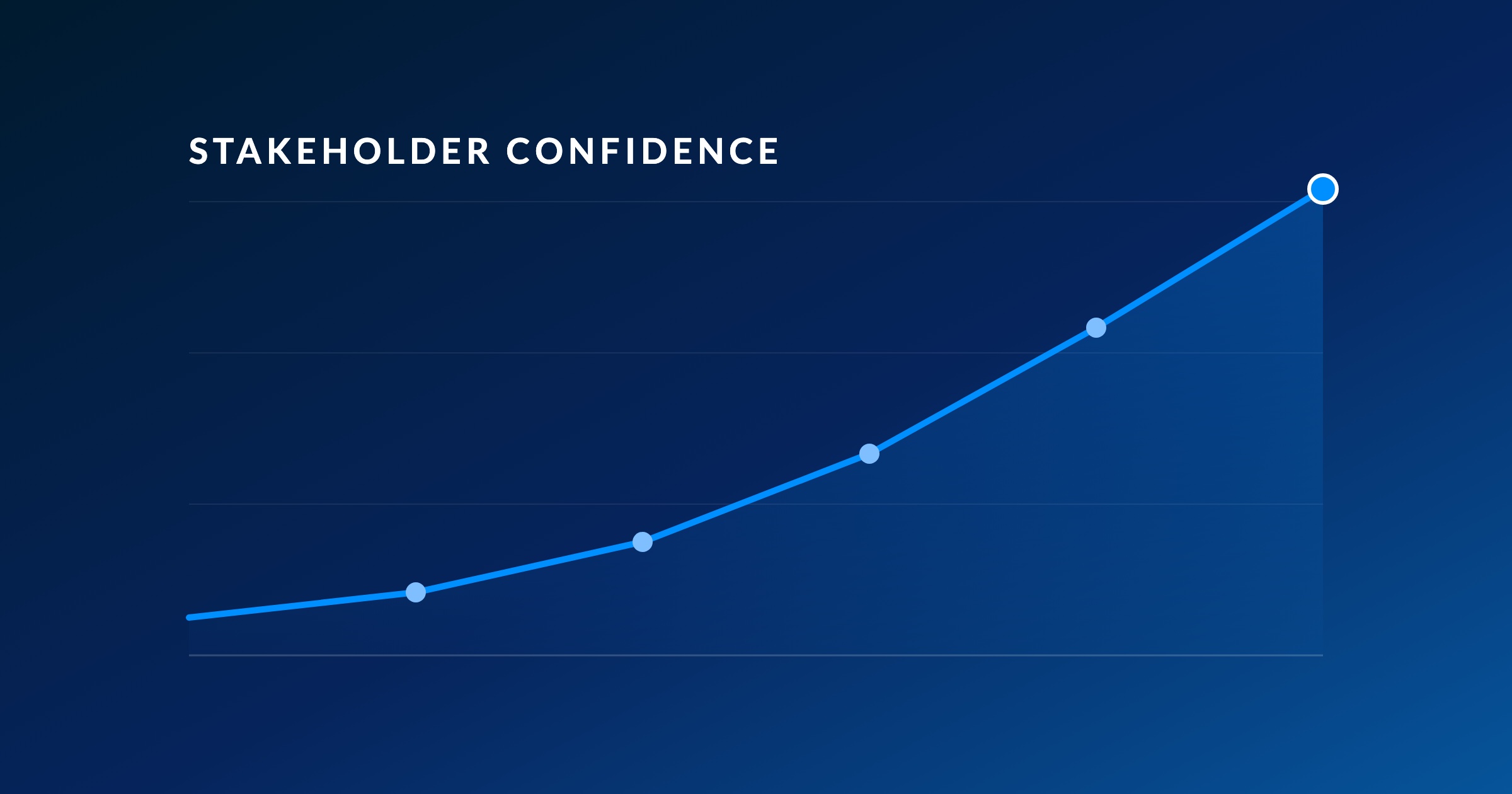
Think of it as progressive commitment. The destination is agreed upfront, but the pace of the journey adapts to what the organization has proven it can absorb. The future state stays fixed. What changes is the level of confidence stakeholders have in accelerating toward it.
Early in a program, confidence is mostly theoretical. Later, it is informed by actual delivery. The more milestones the team hits, the less the conversation revolves around what might happen and the more it revolves around what already has.
The mechanics work like this. Agree on the future state up front, including the improvements everyone knows the business needs. Then commit the schedule only to the scope stakeholders are genuinely confident in, which early in a program usually means something close to the migration minimum. The deferred improvements do not disappear. They are named, agreed, and parked with a trigger condition attached.
That trigger is delivery speed. Many objections to doing more are not really about the calendar. They come from people who have never done the implementation and have no experience of how long it actually takes. They simply believe it will take too long, and early in a program that belief is immovable.
So do not fight it. Let delivery evidence inform the argument. Deliver the scope the organization is comfortable with and measure planned versus actual progress openly.
If the first milestones arrive faster than expected, schedule confidence grows. Stakeholders who initially saw transformation as a threat to the deadline begin to see that more may be possible than they assumed.
The critical step is agreeing upfront what additional delivery capacity will be used for. Otherwise, newfound schedule buffer tends to disappear into contingency reserves, budget reductions, or simply an earlier finish date.
Instead, treat delivery performance as a trigger. If agreed milestones are achieved ahead of plan, the organization revisits the list of deferred improvements and decides which should move forward while confidence is high.
The asymmetry that makes it work
What makes this approach durable is that it wins in both directions.
If the delivery team is right about velocity, the program banks schedule buffer and reinvests it in improvements the business already agreed it wanted. If the team is wrong, the program is exactly where the conservative plan would have put it anyway, with no credibility spent arguing for scope nobody was ready to carry. Either way, the program is better off than if the argument had been fought and won on slides.
Compare that to the alternatives. The consultant who pushes transformation over stakeholder objections owns every slipped date afterward. The one who quietly accepts lift and shift owns the value that never shows up. The middle path converts a philosophical argument into an empirical one.
Confidence is earned through delivery, not in the kickoff deck
There is a deeper point underneath the sequencing tactics. Early in a replacement program, stakeholder confidence in the delivery team is at its lowest exactly when the biggest decisions are being made. Asking an organization to commit to ambitious process change before it has watched the team hit a single milestone is asking it to spend trust it does not yet have.
The middle path respects that. It asks for small trust early, delivers against it visibly, and uses each proven estimate to expand what the organization is willing to attempt. Stakeholders stay involved at every step, so when the buffer conversation comes, it arrives as a shared discovery rather than a renegotiation.
Key takeaways
Name the false choice out loud. If your program is framed as migrate versus transform, both camps are already planning to lose gracefully. Put the middle path on the table as an explicit strategy with its own logic, not as a split-the-difference settlement.
Separate the destination from the commitment. Agree on the full future state early, then commit the schedule only to what stakeholders have real confidence in. A deferred improvement with a named trigger is a plan. A deferred improvement without one is a casualty.
Treat early milestones as calibration, not just progress. The first deliveries are how the organization learns what “too long” actually means. Openly measure planned versus actual, and pre-agree that buffer gets reinvested rather than absorbed.
Do not spend trust you have not earned yet. Pushing ambitious scope past low-confidence stakeholders costs more than it gains, even when you are right. Deliver first. The argument gets much shorter afterward.
Hard deadlines make PLM replacements feel like a choice between speed and value. The programs that end up with both are the ones that refuse to choose on day one, and build a plan that lets the evidence choose along the way.